Blog
TV Wall vs Media Wall: What’s the Difference? (And Which 1 Do You Actually Need?)

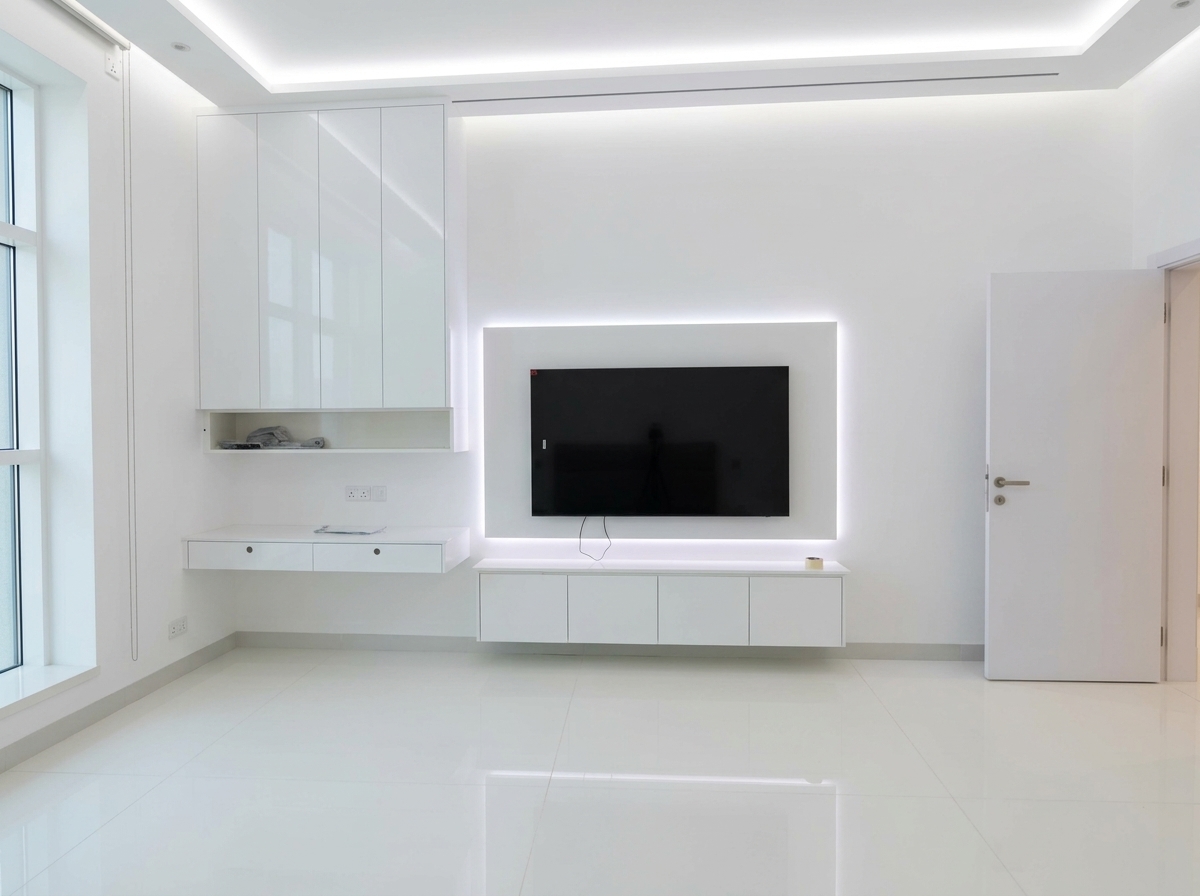
If you’ve started researching TV walls for your Dubai or Abu Dhabi living room, you’ve probably run into half a dozen overlapping terms, TV wall, TV wall unit, TV feature wall, wall unit, media wall , often used to describe more or less the same thing, sometimes describing something quite different. Here’s what each term actually means, so you know what to ask for when you get quotes.
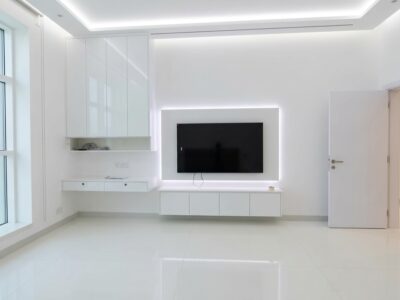
TV wall unit
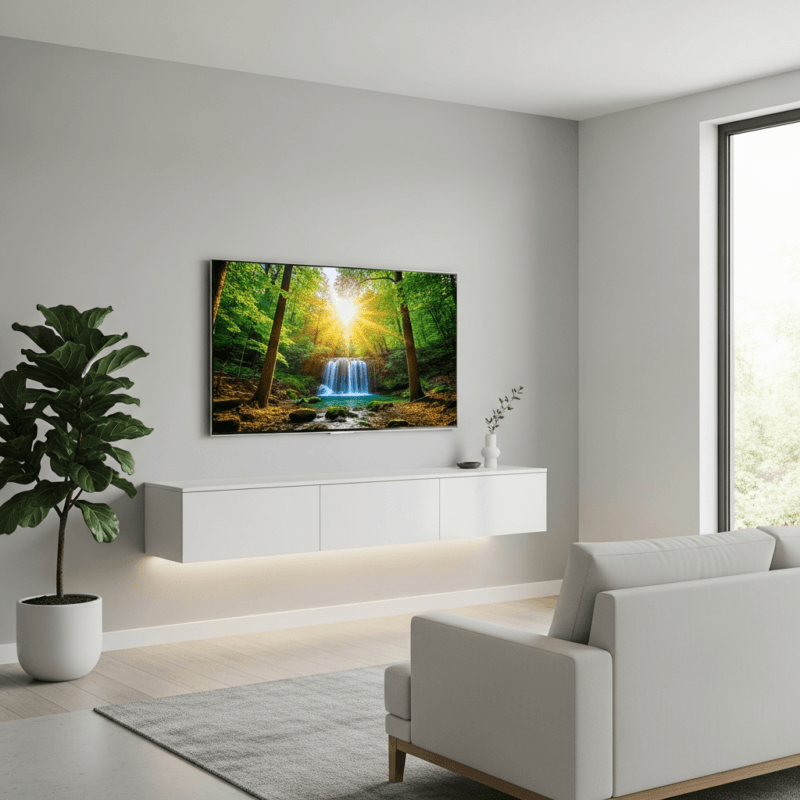
A TV wall unit is furniture, a standalone cabinet or console, usually freestanding or wall-mounted, that a TV sits on or is mounted above. It’s not built into the wall itself; it’s a piece you could theoretically move to a different house. TV wall units range from simple floating shelves to large storage cabinets with drawers and cupboards.
TV feature wall
A TV feature wall describes the design treatment of the wall the TV is mounted on, decorative panelling, textured cladding, a stone or marble-effect finish, or a fluted wood panel, with the TV mounted directly onto it. There isn’t necessarily built-in storage; the focus is the visual statement the wall itself makes.
Media wall
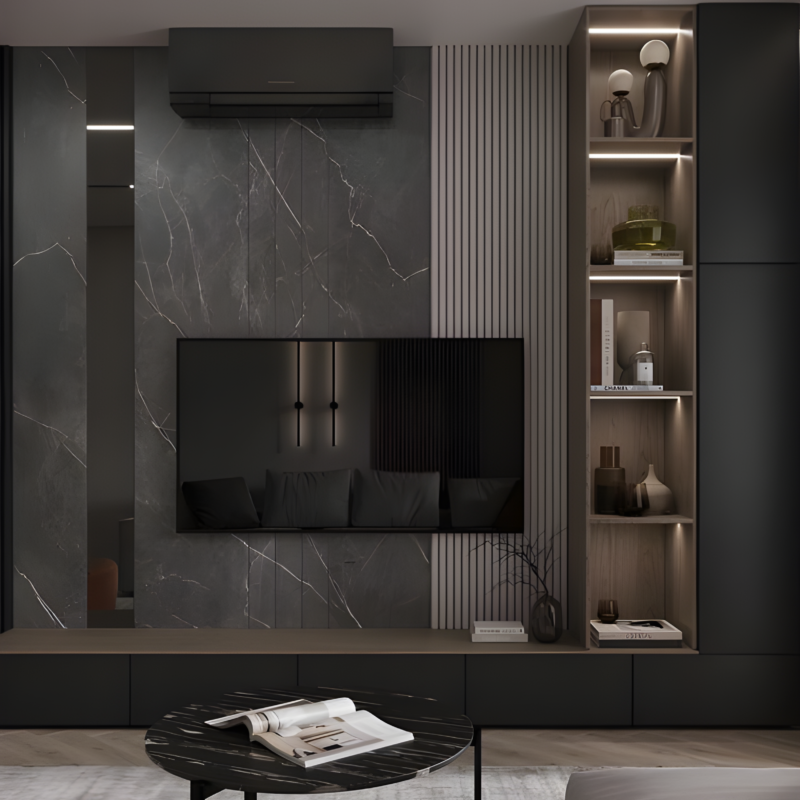
A media wall is the combination of both, a fully custom, built-in unit that includes the TV recess, the surrounding feature panelling, storage, shelving, and hidden cable management, all designed and built as one continuous piece for a specific wall. This is the option most Dubai and Abu Dhabi homeowners land on once they’ve compared the alternatives, because it solves the storage problem and the design problem at the same time.
So which one do you need?
Choose a TV wall unit if: you’re renting, want something you can take with you when you move, or have a limited budget and don’t need built-in storage.
Choose a TV feature wall (panelling only) if: you already have adequate storage elsewhere in the room and just want the wall behind the TV to look intentional rather than blank.
Choose a full media wall if: you want the finished, architectural look — no visible cables, no mismatched furniture, storage built exactly where you need it, and a design that’s tailored to your wall’s dimensions rather than a standard size.
A quick way to decide
Stand in front of the wall where your TV will go and ask: if the TV were switched off right now, would this wall still look intentional? If a freestanding unit and a blank wall wouldn’t cut it, you’re looking for a media wall, not just a TV wall unit.
Cost comparison: TV wall unit vs TV feature wall vs media wall
Budget is usually what actually settles the decision, so here’s how the three options compare in the Dubai and Abu Dhabi market:
TV wall unit (freestanding furniture): The cheapest entry point. You’re paying for a single cabinet or console — no wall alteration, no custom measurement required if you buy off-the-shelf. Cost scales with materials (laminate vs veneer vs marble-top) and size, but it’s the lowest-commitment option since it can move house with you.
TV feature wall (panelling only, no built-in storage): Priced per square meter of wall covered. A simple painted or PVC-panelled feature wall behind the TV is relatively affordable; a stone-effect or full marble-clad feature wall is significantly more, since natural or engineered stone material costs more than PVC or WPC panelling and takes longer to install.
Full media wall (recess, storage, cable management, panelling, often LED): The highest cost of the three because you’re paying for carpentry, electrical routing for hidden cables, custom-cut panels, and finish work combined — but it’s also the only option of the three solving the storage and wiring problem at the same time. Most of our Dubai and Abu Dhabi clients find that once they add up the cost of a decent TV unit plus a separate feature wall treatment plus an electrician to hide the cables, the total isn’t far off a media wall quote — except the media wall is a single tailored piece instead of three separate ones.
For an exact number based on your wall size, WhatsApp us your dimensions for a free same-day estimate.
Materials and finishes, by option
TV wall units are typically MDF or engineered wood with a laminate, veneer, or lacquer finish, sometimes with a tempered glass or marble-effect top panel.
TV feature walls are most commonly built from PVC panels (budget, fully waterproof, wood-grain or matte finishes), WPC fluted panels (the current trend — vertical reeded texture, usually walnut, oak or black oak, often paired with LED strip lighting), or stone/marble-effect cladding for a heavier, more formal look in majlis or reception areas.
Media walls combine structural MDF or plywood carcassing (for the recess and storage) with a facing finish, wood veneer, matte or high-gloss lacquer, marble-effect panels, or fluted WPC — plus integrated LED lighting and cable routing built into the carpentry itself.
Room-by-room: what actually gets ordered
Apartment living room (Dubai Marina, JVC, Business Bay, Downtown): Space is usually the constraint, not budget. A floating media wall or a slim wall-mounted TV unit with a feature panel behind it is the most common choice, it keeps the floor open and avoids a bulky freestanding cabinet eating into a small room.
Villa living room (Emirates Hills, Arabian Ranches, Khalifa City, Al Bateen): Floor-to-ceiling media walls are the default here. With more wall height and width to work with, clients typically go for a full recess, closed and open storage either side of the TV, and LED-lit fluted panelling running to the ceiling.
Majlis or formal reception room: This is where TV feature walls with stone or marble-effect cladding show up most, sometimes without a TV at all, purely as an architectural feature wall.
Rented apartments: A freestanding TV wall unit is usually the pragmatic choice, since it moves with the tenant and doesn’t require permission to alter the wall. Click-fit PVC panelling is the exception — some landlords allow it since it’s low-damage to remove.
Kids’ or family TV rooms: Budget-conscious feature walls (painted panel or simple PVC texture) paired with a durable, scratch-resistant TV unit tend to be the practical combination, since these rooms see the heaviest daily use.
Common mistakes people make when ordering the wrong one
Buying a TV unit that doesn’t match the wall width. A freestanding unit that’s narrower or wider than the visual center of the room looks accidental rather than designed — this is the single most common regret we hear from clients who furnished a TV wall themselves before calling a joinery company.
Adding a feature wall without planning cable routing first. A beautiful panelled wall with a visible power cord and HDMI cable running down it undoes the effect immediately. If you’re doing any kind of panelling behind a TV, plan the cable chase before the panels go up, not after.
Underestimating storage needs. A slim floating shelf looks clean in photos but often can’t actually fit a soundbar, a games console, a router, and a set-top box once you’re living with it. This is usually what pushes people from a simple TV wall unit toward a full media wall with proper enclosed storage.
Choosing panelling that isn’t rated for the room. Standard MDF-based decorative panels can warp in humid, poorly ventilated rooms over time. If the room isn’t well air-conditioned year-round, ask specifically for moisture-resistant WPC or PVC panelling rather than a standard MDF board finish.
What we build
At AlUmaima Interiors, most of our Dubai and Abu Dhabi clients start out asking for a “TV wall” or “TV unit” and end up with a full media wall once they see the difference hidden wiring and built-in storage makes to the finished room. We design and install all three — from a simple floating TV wall unit to a full floor-to-ceiling media wall with LED-lit fluted panelling — measured and fitted to your exact wall, with a free in-home measurement visit anywhere in Dubai or Abu Dhabi.
FAQ
Is a media wall worth it over a TV feature wall if I’m on a tight budget? If storage is a real need — games consoles, routers, media boxes, books — a media wall usually works out similar in total cost to buying a separate TV unit plus panelling plus an electrician, while looking far more finished. If you only need the visual impact and already have storage elsewhere, a feature wall alone is the more budget-friendly route.
Can an existing TV wall unit be turned into a media wall later? Not directly — a media wall is built as one continuous piece around your specific wall and TV position, so an existing freestanding unit would need to be removed rather than incorporated. Some clients do reuse the same TV mount and cable routing, though, which saves a bit on the electrical work.
Do TV feature walls need an electrician? Only if you want cables fully hidden inside the wall rather than routed along a surface channel. For rented apartments where you can’t chase cables into the wall, a slim surface-mounted cable cover is the usual workaround.
How do I know if my wall can support a full media wall recess? This depends on whether the wall is load-bearing and what’s behind it (services, ducting). Our free measurement visit includes checking this before we confirm a design, so nothing is promised that can’t actually be built.
What’s the fastest option if I need something installed quickly? A freestanding TV wall unit, since it doesn’t require custom cutting or wall alteration, most are available same-week. A media wall, being fully custom, typically takes longer from measurement to installation but is worth the wait for the finished result.
See our media wall designs or WhatsApp us for a free measurement visit.